
Climate resilience
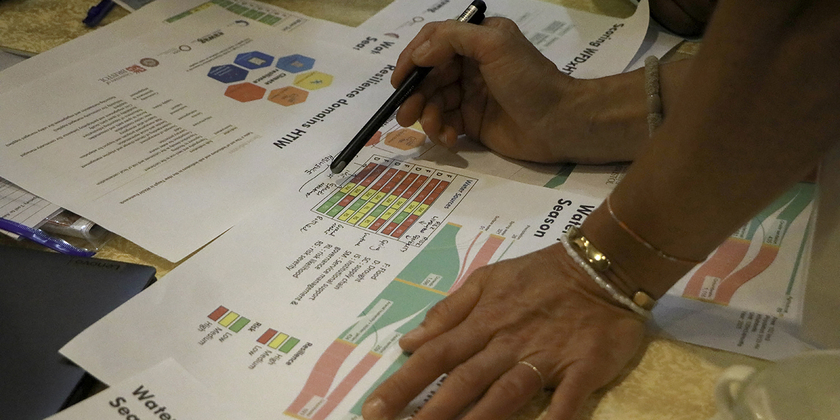
As climate change resilience becomes more and more necessary, we aim at including this aspect in the WFD.
To that effect, a collaboration is ongoing in Nepal with the university of Kathmandu and the university of Bristol.
The WFD will be complemented with the “How tough is WASH framework” (HTIW) developed by the University of Bristol, Kathmandu University, and Haramaya University. The HTIW is a participatory tool that allows local actors to self-identify the vulnerability and resilience of WASH systems considering infrastructure and the environmental setting, but also management practices, supply chains and institutional support. The HTIW will be adapted to identify vulnerabilities and resilience of the different components of the WFD and to visualize the results in the same diagram.
The method is being developed using a co‐creation approach with local stakeholders. Key opportunities for better management and measures to improve climate resilience are being identified and discussed during a participatory process.
Research questions are:
- How can the How tough is WASH (HTIW) framework be applied within the Water Flow Diagram (WFD)?
- Is the proposed methodology simple enough to be applicable by local stakeholders?
- Does the proposed methodology adequately reflect water management challenges as well as climate risk related vulnerabilities and resilience
- How can the tool trigger a participative process to find and implement solutions to improve climate resilience?



Project partners